
5 pillars of faith in the Muslim religion This paper presents an overview of one of the core foundations of Islamic belief, exploring the six pillars of faith that define a Muslim’s spiritual understanding.
Through this work, Surah Academy aims to explain these pillars clearly and highlight their importance in shaping the believer’s identity and daily life.
The paper discusses each pillar in a structured manner, beginning with belief in Allah as the central element of faith, followed by belief in His angels, His revealed books, His prophets and messengers, the Day of Judgment, and finally, divine destiny with all the good and bad it entails.
By examining these principles, the text emphasizes how they shape a Muslim’s worldview, guide moral behavior, and strengthen spiritual resilience. Surah Academy also highlights the relevance of these pillars in contemporary life, demonstrating how they offer stability, purpose, and a deep sense of connection to God in an ever-changing world.
Understanding the 5 Pillars of Faith in the Muslim Religion
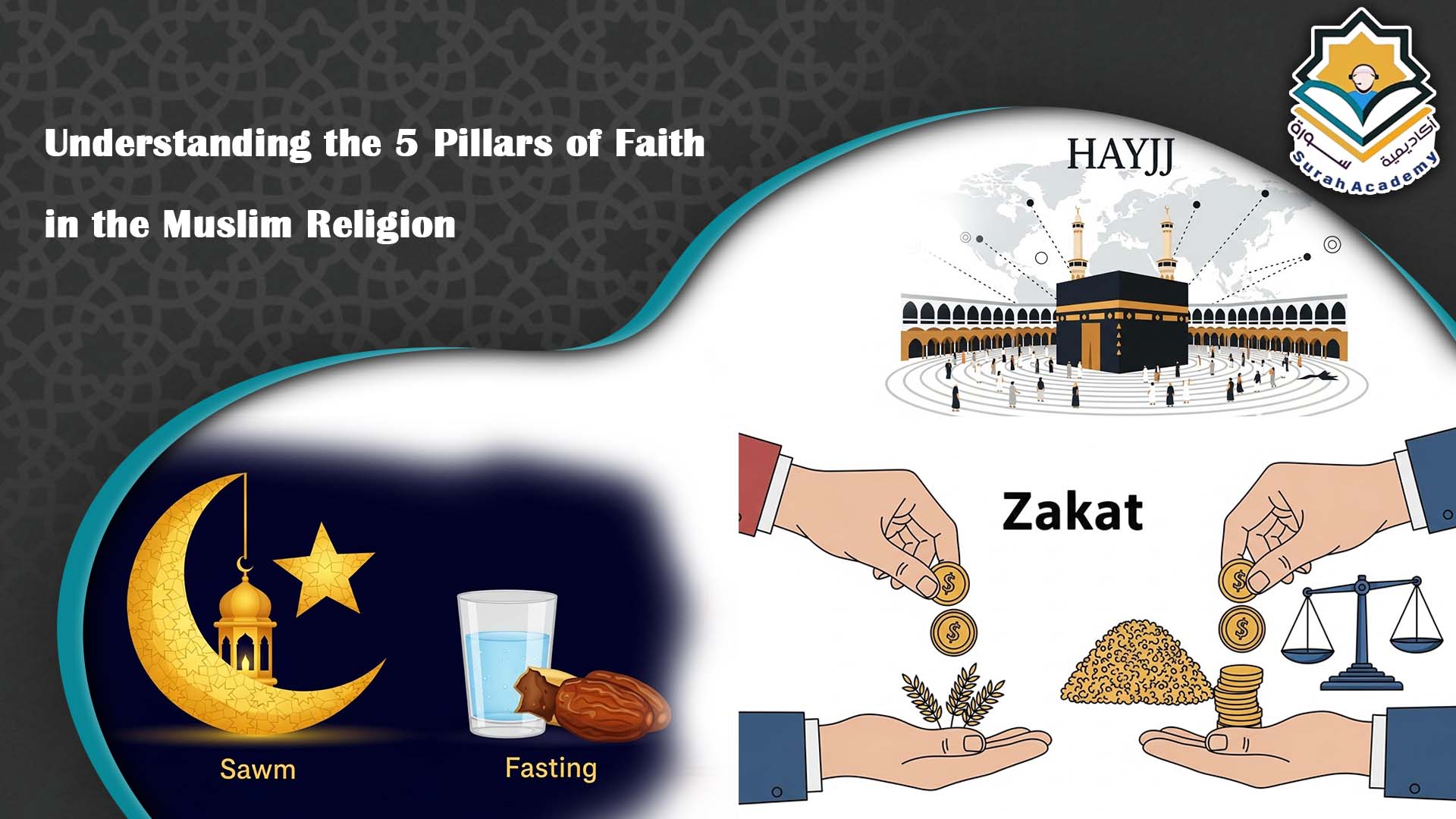
The 5 pillars of faith in the Muslim religion form the core foundation of a Muslim’s belief system. These pillars, also known as the articles of faith, guide a Muslim’s understanding of God, spirituality, and moral responsibility. They are essential for developing a complete and sincere faith according to Islamic teachings.
The six pillars include belief in God (Allah), belief in angels, belief in the holy scriptures revealed by God, belief in the prophets, belief in the Day of Judgment, and belief in divine destiny. Each pillar plays a unique role in shaping a Muslim’s faith and daily life.
Teaching children about the 5 pillars of faith in the Muslim religion from an early age is crucial. Introducing these concepts gradually helps children build a strong spiritual foundation. Parents and teachers can use stories, Quranic examples, and interactive activities to make learning engaging and meaningful. This approach fosters both understanding and moral development in young Muslims.
Understanding the 5 pillars of faith in the Muslim religion also promotes personal growth and reflection. Belief in angels reminds Muslims of divine guidance, while belief in prophets emphasizes following God’s messengers. Belief in the Day of Judgment and divine destiny teaches accountability, patience, and trust in God.
Practicing the 5 pillars of faith in the Muslim religion strengthens faith, builds moral character, and deepens one’s connection with God. Knowledge and application of these pillars are essential for children and adults alike, helping them live a spiritually aware and meaningful life.
Online Quran Academy
Surah Academy offers a unique online learning experience for studying the Holy Quran, combining tajweed, memorization, and comprehensive understanding in a structured and professional way.
Through its digital platform, students can learn at flexible times that fit their daily schedules, guided by qualified instructors who provide personal support and explanations.
The academy focuses on developing a deep understanding of the Quranic texts while enhancing spiritual growth and Islamic knowledge, making Surah Academy an excellent choice for anyone seeking serious and professional Quranic study online.

Blooming Faith: The 5 Pillars in Islam
Faith in Islam is not simply a book to be read, a class to attend, or a lecture to listen to. Rather, it is like a flower that blooms gradually in the heart, nurtured by trust and belief, eventually blossoming into a beautiful, vibrant life force. This spiritual flower, representing deep conviction, is cultivated through understanding, reflection, and practice.
The essence of faith in Islam grows like a plant with six branches, each rooted in the heart from the very first moments of contact with the religion. Over time, life experiences, learning, and devotion help these seeds flourish into radiant blossoms carrying divine guidance. Central to nurturing this faith are the 5 pillars of faith in the Muslim religion, which provide the framework for spiritual growth and moral strength. They guide Muslims in their daily lives, connecting the heart, mind, and actions to a higher purpose.
The 5 pillars of faith in the Muslim religion are more than mere rituals; they are practical tools that reinforce the trust and certainty within the believer’s heart. Just as a gardener carefully tends to a young plant, practicing prayer, charity, fasting, pilgrimage, and sincere declaration of faith ensures that the flower of belief thrives and remains resilient amidst life’s challenges.
Every Muslim is encouraged to reflect on these principles regularly, allowing the 5 pillars of faith in the Muslim religion to guide their decisions, behavior, and inner spiritual journey. With consistent care, the heart becomes a garden of faith, blossoming with love, patience, and unwavering trust in Allah.
Ultimately, the flower of faith in Islam represents a lifelong journey, where the 5 pillars of faith in the Muslim religion serve as both roots and sunlight. They nourish the believer’s spirit, ensuring that the beauty of faith continues to grow, flourish, and illuminate the path of life with divine wisdom and eternal serenity.
What Are the Pillars of Faith?
The Six Pillars of Faith are the foundation of belief for all Muslims. A Muslim’s faith is not considered complete or valid unless they truly and deeply believe in all six of these pillars.
The Prophet Muhammad ﷺ said in a Hadith: “Faith is to believe in Allah, His angels, His books, His messengers, the Last Day, and the divine decree, both its good and its bad.”
The 5 pillars of faith in the Muslim religion are the core of beliefs and practices in Islam:
Faith in Allah: Core of Islamic Belief
Faith in Allah is the fundamental aspect of the 5 pillars of faith in the Muslim religion and forms the core of Islamic belief. Acknowledging the existence of Allah and accepting Him as the one true God is at the heart of Islam.
Belief in Allah means recognizing Him as the Creator of everything and understanding that His existence transcends all limits of time and space. Allah’s nature is entirely different from that of His creation, and no one can compare to Him. This is clearly explained in the Quran in Surah Al-Ikhlas: “Say, He is Allah, the One; Allah, the Eternal Refuge. He neither begets nor is born, nor is there to Him any equivalent.”
Faith in Allah also requires acknowledging His divinity, which means striving to obey Him at all times and following His commands sincerely and accurately. True faith leads to a life guided by Islamic principles, where actions reflect belief and moral responsibility.
Understanding the importance of faith in Allah helps Muslims strengthen other aspects of the 5 pillars of faith in the Muslim religion. Each pillar is interconnected, and strong belief in Allah supports belief in His angels, His books, His messengers, the Last Day, and divine decree.
Moreover, faith in Allah nurtures spiritual growth, providing the believer with inner peace, resilience, and guidance through life’s challenges. It is the foundation upon which all other aspects of Islamic faith rest, making it essential for a complete and balanced belief system.
By focusing on faith in Allah, Muslims can deepen their understanding and practice of the 5 pillars of faith in the Muslim religion, ensuring that their hearts remain aligned with divine guidance. Ultimately, this central pillar strengthens the overall spiritual journey and keeps the believer connected to Allah, forming the foundation of true faith within the 5 pillars of faith in the Muslim religion.
Faith in Angels: The Second Pillar of Faith
Faith in angels is the second pillar of the 5 pillars of faith in the Muslim religion, and without it, a Muslim’s faith is incomplete. Angels have many roles in Islamic history and belief. The Quran was revealed to Prophet Muhammad ﷺ through the angel Jibreel (Gabriel). Israfil will blow the trumpet on the Day of Judgment, and Munkar and Nakir question humans in their graves.
Additionally, Azrael is responsible for taking souls at death, Malik oversees the gates of Hell, and Ridwan guards the gates of Paradise. Belief in angels is therefore essential for faith in the Quran’s revelation, the events of the Last Day, the questioning after death, and the reality of Heaven and Hell.
Allah emphasizes the importance of believing in angels in the Quran in Surah An-Nisa: “Indeed, those who disbelieve in Allah, His angels, His books, His messengers, and the Last Day have strayed far away.”
Faith in angels requires strong faith in Allah because angels are unseen by humans. To fill the heart with true faith, a believer must acknowledge their existence and trust in the attributes Allah has given them. By doing so, Muslims strengthen the second pillar of the 5 pillars of faith in the Muslim religion, reinforcing their connection to divine guidance and moral responsibility.
Understanding and practicing faith in angels helps believers strengthen their overall faith, as it is intertwined with belief in Allah, His revelations, and the events of the Last Day. Focusing on the second pillar of the 5 pillars of faith in the Muslim religion ensures that the heart is spiritually aligned and prepared to accept divine commands and wisdom.
Ultimately, belief in angels supports a complete and balanced practice of faith, making the second pillar of the 5 pillars of faith in the Muslim religion essential for a strong, resilient, and spiritually aware Muslim heart.
Faith in God’s Holy Books
Faith in God’s holy books is the third pillar of the 5 pillars of faith in the Muslim religion, and its importance lies in the nature and value of these sacred scriptures. These books are not human words; they are the words of Allah. They include the Scrolls of Abraham, the Psalms of David, the Torah of Moses, the Gospel of Jesus, and the Quran of Prophet Muhammad ﷺ, all revealed to His messengers through angels.
These holy books contain Allah’s message to humanity, including commands to follow and warnings to heed. Belief in these scriptures is essential for complete faith in Allah, as it recognizes the divine origin and purpose of these texts. By accepting their sacredness and guidance, a believer strengthens their understanding of Allah’s will.
Allah emphasizes the importance of strong belief in His revealed books in the Quran, in Surah Al-Baqarah: “This is the Book about which there is no doubt, a guidance for those conscious of Allah.”
Understanding the significance of faith in the holy books helps Muslims strengthen the third pillar of the 5 pillars of faith in the Muslim religion. This belief connects the heart to divine wisdom and ensures that guidance from Allah is respected and followed.
By practicing faith in Allah’s scriptures, believers align themselves with the teachings of the prophets, reinforcing moral conduct and spiritual growth. Faith in the holy books is therefore a vital part of the 5 pillars of faith in the Muslim religion, guiding the believer’s life with knowledge, obedience, and devotion.
Ultimately, belief in the sacred texts supports the journey of faith, making the third pillar of the 5 pillars of faith in the Muslim religion essential for a complete, balanced, and spiritually enlightened Muslim life.
Faith in Allah’s Messengers
Faith in Allah’s messengers is the fourth pillar of the 5 pillars of faith in the Muslim religion. Without believing that God’s messengers are truly His chosen prophets and not ordinary humans, one cannot fully believe in the holy books or follow Allah’s commands.
The messengers of Allah serve as a bridge between humanity and God. They receive divine revelation and convey it to people, guiding them toward understanding Allah and His will. Disbelief in the messengers is equivalent to rejecting the religion itself.
For this reason, faith in Allah’s messengers is essential, and a Muslim’s faith is considered incomplete without belief in all of His prophets. This includes respecting and acknowledging every prophet, from Moses to Jesus, and recognizing the distinction between true messengers and false deities that some people have wrongly worshiped.
Understanding the role of the prophets strengthens the fourth pillar of the 5 pillars of faith in the Muslim religion. It helps believers follow the guidance provided through divine messages and ensures that their actions are aligned with Allah’s commands. By honoring the messengers, Muslims connect their hearts to the wisdom and teachings revealed by Allah throughout history.
Faith in the messengers also reinforces the believer’s understanding of all other pillars, including faith in Allah, the angels, the holy books, and the Last Day. Observing the fourth pillar of the 5 pillars of faith in the Muslim religion ensures that faith is active, meaningful, and consistently shapes moral and spiritual conduct.
Ultimately, belief in Allah’s messengers completes the spiritual foundation of a Muslim, making the fourth pillar of the 5 pillars of faith in the Muslim religion indispensable for a faithful, balanced, and spiritually aware life.
Faith in the Day of Judgment
Faith in the Day of Judgment is the fifth pillar of the 5 pillars of faith in the Muslim religion. While believing in logical and tangible matters comes naturally, the true challenge lies in having strong faith in concepts that go beyond human understanding.
The Day of Judgment will occur at the end of time, and everything known about it challenges the natural laws. Despite this, our faith in it must remain unwavering. Belief in the Last Day encourages Muslims to discipline their hearts and minds, and to adhere strictly to the teachings of Islam. Every individual will be held accountable for their actions, and justice will prevail.
Without belief in the Day of Judgment, humanity would lack a compelling reason to refrain from corruption and wrongdoing. This belief motivates moral behavior and reinforces the spiritual responsibility of each person. Understanding the significance of this day strengthens the fifth pillar of the 5 pillars of faith in the Muslim religion, ensuring that faith is not only theoretical but actively guides daily conduct.
Faith in the Last Day also deepens understanding of other pillars, as it links belief in Allah, His angels, the holy books, and the messengers to ultimate accountability. By reflecting on the consequences of actions in the Hereafter, Muslims maintain a strong connection to divine guidance and moral integrity.
Ultimately, faith in the Day of Judgment completes the foundation of a Muslim’s belief system. It is the fifth pillar of the 5 pillars of faith in the Muslim religion, essential for cultivating a life of discipline, spiritual awareness, and moral responsibility. This belief ensures that the heart and mind remain aligned with divine wisdom, preparing the believer for eternal justice and reward.
Why the 5 Pillars of Faith in the Muslim Religion Are Important
And is this also faith? The word faith (Iman) comes from the root “amn,” which signifies safety, security, and inner peace. Faith is not just a belief spoken or a concept understood; it is a deep trust that fills the heart completely.
Only when faith overflows in a Muslim’s heart can they feel a profound sense of security and calm that nothing in the world can shake. This inner peace helps a person face life’s challenges with patience, resilience, and confidence, knowing they are guided by a higher power.
Faith can be translated as “belief” or “trust,” referring to convictions in which a person places complete confidence. It is a living, active force shaping thoughts, feelings, and actions. Faith acts as a cornerstone in the human heart, providing stability, guidance, and balance, helping individuals remain grounded while offering emotional and spiritual clarity.
In Islam, faith grows and strengthens through reflection, practice, and devotion. Central to this growth are the 5 pillars of faith in the Muslim religion, which connect belief with action. These pillars guide Muslims daily, shaping choices, behavior, and their spiritual journey. Practicing the 5 pillars of faith in the Muslim religion cultivates patience, humility, and a deeper connection to Allah.
The 5 pillars of faith in the Muslim religion are practical tools that reinforce trust and certainty. Prayer, charity, fasting, pilgrimage, and sincere declaration of faith allow the heart to flourish. Reflecting on the 5 pillars of faith in the Muslim religion ensures that faith is active, guiding moral conduct and life purpose.
Ultimately, faith (Iman) aligned with the 5 pillars of faith in the Muslim religion creates a balanced, resilient heart deeply connected to the divine, nurturing peace, certainty, and spiritual harmony.
Faith in Divine Destiny

Faith in divine destiny, or Qadar, addresses an age-old question: Are human choices truly ours, or are they preordained by Allah? The answer is both. While major life events—such as the time and place of our birth, our partners, and our future children—are part of Allah’s unchangeable decree, our daily actions are personal choices.
Belief in divine destiny means recognizing that our lives are ultimately under Allah’s control. He has planned our existence, yet He grants us opportunities to make decisions within that framework. This understanding is essential for completing the foundation of faith and links closely with all other pillars. Faith in destiny strengthens the sixth pillar of the 5 pillars of faith in the Muslim religion, reminding believers that life is a balance between divine decree and personal responsibility.
Though this concept may seem intimidating to some, it offers profound comfort. Knowing that Allah, our Creator, governs every aspect of our life reassures us that every decree is good, purposeful, and aligned with ultimate wisdom. This belief encourages patience, trust, and resilience, particularly in times of hardship.
Understanding divine destiny also reinforces adherence to the other pillars, such as faith in Allah, the angels, the holy books, the messengers, and the Day of Judgment. By accepting Qadar, Muslims cultivate inner peace and strengthen moral responsibility, knowing that their choices matter within Allah’s divine plan.
Ultimately, faith in divine destiny completes the holistic framework of Islamic belief. It is the sixth pillar of the 5 pillars of faith in the Muslim religion, essential for a balanced, spiritually aware, and confident Muslim life. Through this faith, believers trust in Allah’s wisdom, embrace life’s challenges, and find serenity in knowing that every decree from Allah is ultimately good.
Frequently Asked Questions about the Pillars of Faith in Islam
The pillars of faith form the foundation of a Muslim’s belief, guiding their relationship with God and daily life. FAQs often cover what the pillars are, their importance, and how they affect behavior. Understanding these answers helps strengthen faith and maintain a close connection with God.
1.What are the pillars of faith in Islam?
The pillars of faith are six: belief in Allah, His angels, His revealed books, His prophets, the Day of Judgment, and divine destiny (Qadr) both good and bad.
2.Why are the pillars of faith important?
They form the foundation of Islamic belief, guide a Muslim’s behavior, strengthen the connection with God, and provide spiritual and moral stability.
3.Must every Muslim believe in all the pillars?
Yes, believing in all six pillars is essential for every Muslim, as they are the core of faith.
4.What is the difference between the pillars of Islam and the pillars of faith?
The pillars of Islam refer to practical actions (prayer, fasting, zakat, pilgrimage), while the pillars of faith relate to belief and the heart.
5.How does belief in divine destiny (Qadr) affect a Muslim’s life?
It encourages patience in hardships, acceptance of God’s will, and reliance on Him.
6.Is belief in angels necessary?
Yes, belief in angels is a fundamental part of faith, as they carry out God’s commands and act as intermediaries.
7.How can children be taught the pillars of faith?
Through simple explanations, daily examples, Quranic stories, and connecting the beliefs to everyday actions.
In conclusion, the six pillars of faith form a solid foundation for Islamic belief, guiding a Muslim’s life and strengthening their connection with God. Understanding and practicing these principles provides spiritual confidence, moral guidance, and resilience in facing life’s challenges.
These pillars are not merely religious obligations; they offer a framework for ethical behavior, personal growth, and inner peace. By adhering to them, a Muslim can navigate the complexities of modern life with clarity and purpose.
Surah Academy emphasizes that these timeless principles continue to inspire stability, meaning, and a deep sense of devotion in every aspect of a believer’s life.
read more:
Islamic online school for Quran learning USA 2025
online Quran academy for adults 2025
Best Way to Learn Arabic Online: Step-by-Step Roadmap 2025