
How to Learn Quran for Beginners At Surah Academy, we guide new learners in starting their Quranic journey with confidence and ease.
Whether you are a child, adult, or non-Arabic speaker, learning the Quran requires patience, proper guidance, and consistent practice. Surah Academy provides expert teachers, structured lessons, and practical tools to help beginners read, memorize, and understand the Quran effectively.
By mastering Arabic letters with Noorani Qaida, learning basic Tajweed, memorizing short surahs, and understanding meanings, students build a strong foundation. With Surah Academy, how to learn Quran for beginners becomes a rewarding and spiritually enriching experience.
Why Learning the Quran is Important for Beginners?
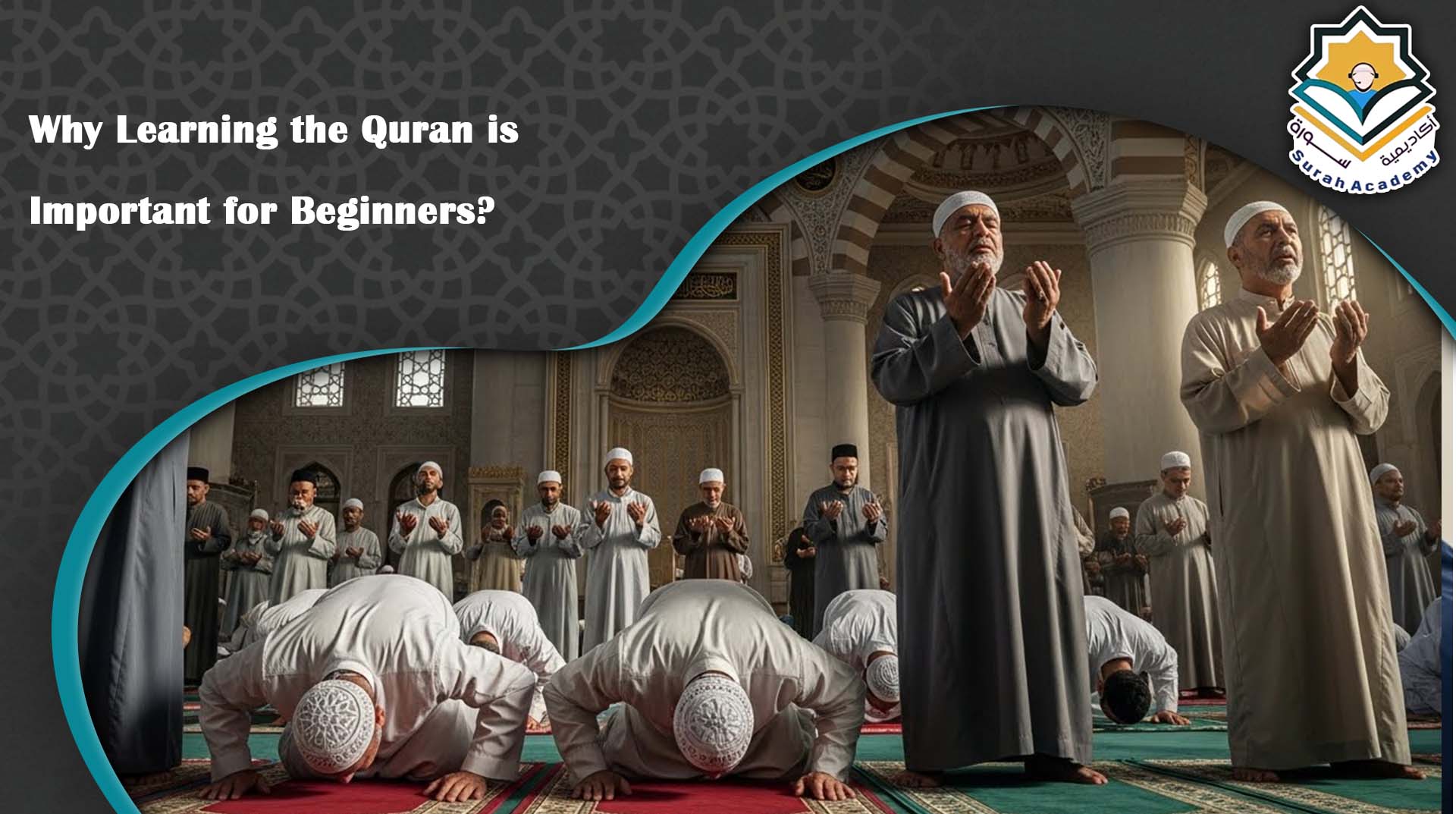
Before starting to learn the Quran, it is essential to have a sincere intention. Learning the Quran is not just about reciting words—it is about connecting with the words of Allah, our Creator, and using His guidance to live a meaningful life. The Quran teaches us how to be righteous Muslims and how to live in a way that pleases Allah.
Allah says in the Quran:
“A blessed Book We have revealed to you, that they may reflect upon its verses, and those of understanding may take heed.” (Surah Sad 38:29)
This verse reminds us that the Quran is a source of blessing and guidance. For beginners, learning the Quran brings spiritual rewards and enriches life with divine wisdom. Therefore, it is crucial to purify your heart and intention. Ask yourself: Why do I want to learn the Quran? It should never be for showing off or pride. We learn the Quran for the pleasure of Allah alone.
Prayer is an important part of this journey. Beginners can ask Allah for ease and guidance in their learning, for example: “O Allah, I want to learn Your Book to draw closer to You. Please make it easy for me.”
Understanding why learning the Quran is important helps beginners stay motivated and patient. It reminds us that this is a lifelong journey of spiritual growth, reflection, and connection with Allah. By approaching the Quran with sincerity, beginners can develop a meaningful relationship with Allah’s words and experience the blessings that come with studying His guidance.
Learning the Quran as a beginner is not only about memorization or recitation—it is about building a foundation of faith, understanding, and devotion that will guide a person throughout their life.
Online Quran Academy
In the era of technology and digital learning, studying the Quran has become easier and more flexible than ever. Surah Academy offers an exceptional educational platform that enables students to study the Quran online in an organized academic manner.
The academy focuses on combining traditional methods of teaching recitation and Tajweed with the latest digital learning techniques, ensuring that learners gain a deep understanding of the Quranic texts while developing their reading and spiritual skills comprehensively.
Thanks to Surah Academy, everyone can learn from anywhere at any time, benefiting from the guidance of specialized teachers and interactive lessons.

Choosing the Right Mushaf for Beginners
One of the most important steps in how to learn Quran for beginners is selecting the right Mushaf (Quran copy). A clear and easy-to-read script, such as the Uthmani style, is highly recommended because it helps beginners read accurately and confidently. Starting with a clear script lays a strong foundation for correct pronunciation and understanding, which is essential in the early stages of learning.
Including a translation in your native language can be very helpful. While the translation is not a replacement for the Quran itself, it supports comprehension and allows beginners to understand the meanings of the verses. This is especially useful for those focusing on how to learn Quran for beginners, as understanding meaning alongside recitation enhances spiritual connection and retention.
Tajweed marks are another key feature to look for in a beginner-friendly Mushaf. Colored or visual indicators of pronunciation rules make it easier to see where to pause, elongate, or emphasize letters. This visual guidance strengthens proper recitation and makes the learning process smoother for anyone seeking how to learn Quran for beginners.
A practical tip is not to rely solely on digital copies. Owning a physical Mushaf helps beginners feel the blessing of holding and reading from the Quran. The tactile connection can increase focus, devotion, and consistency in daily practice.
By carefully choosing a Mushaf with a clear script, translation, and Tajweed marks, beginners can begin their Quranic journey with confidence. This foundational step is a crucial part of how to learn Quran for beginners, making the process more effective, spiritually rewarding, and inspiring for lifelong learning.
Starting with the Noorani Qaida
For those learning the Quran, beginning with the Noorani Qaida is an essential step. This guide is useful for both children and adults because it teaches the shapes of Arabic letters and how to pronounce them correctly with the proper vowel marks, including Fatha, Damma, and Kasra. Mastering these basics is a crucial part of how to learn Quran for beginners, as it lays the foundation for accurate reading and recitation.
For example, the word بِسْمِ (Bismi) means “In the name [of]…” and demonstrates the proper pronunciation of the letters with their corresponding vowels. Another example is اللَّهِ (Allah), where the Shaddah (double consonant) on the letter “Lam” indicates a prolonged sound, which is important for correct recitation.
Using the Noorani Qaida helps beginners recognize letters in isolation and in combination, allowing them to read full words and eventually entire verses with confidence. It also reinforces the rules of pronunciation early, making the later steps of Tajweed and memorization easier.
By starting with this structured approach, beginners can systematically learn the basics of Arabic and Quranic recitation. Understanding the letters, sounds, and vowel rules through the Noorani Qaida is a key strategy in how to learn Quran for beginners, ensuring that the learner builds a strong foundation for accurate and meaningful Quran reading.
Learning Basic Tajweed Rules
Tajweed is the art of reciting the Quran correctly and beautifully. For anyone wondering how to learn Quran for beginners, understanding Tajweed is a crucial step. It ensures that the words of Allah are pronounced accurately, preserving their meaning and enhancing the spiritual experience of recitation.
When starting, it is important not to overwhelm yourself by trying to learn all the rules at once. Focus on the basics first. Key areas include the proper articulation points of letters (Makharij), extending vowel sounds (Madd), and learning the rules of Noon Saakinah and Tanween. Mastering these fundamentals provides a strong foundation for more advanced Tajweed later.
For beginners, combining practical exercises with guidance from a qualified teacher is very effective. Teachers can demonstrate correct pronunciation, correct mistakes, and provide tips that make learning easier. Understanding these rules early on is a vital part of how to learn Quran for beginners, as it builds confidence and prevents the formation of bad habits.
Regular practice is essential. Dedicate a fixed time daily to recite and apply Tajweed rules gradually. Use short verses to practice, repeating them until they are pronounced correctly. Remember, learning Tajweed is not a race—it is a step-by-step journey.
By focusing on basic Tajweed rules, learners can gradually improve their recitation skills and gain the confidence to read longer passages. This methodical approach is an important component of how to learn Quran for beginners and ensures that your recitation is both accurate and beautiful. With patience, consistency, and sincere intention, mastering these basics will make the journey of how to learn Quran for beginners smooth, rewarding, and spiritually enriching.
Finding a Qualified Teacher
One of the most important steps in how to learn Quran for beginners is finding a qualified teacher. A knowledgeable teacher with an Ijazah (certificate of authorization) ensures that you learn the Quran correctly and preserve authentic recitation.
A qualified teacher can guide you through the proper pronunciation of letters, application of Tajweed rules, and understanding of verses. This personalized guidance is invaluable, especially for beginners who may struggle with self-study or digital resources alone. Learning under the supervision of a teacher also helps correct mistakes early, which is a crucial part of how to learn Quran for beginners.
Additionally, a teacher can provide structured lessons, track your progress, and motivate you to stay consistent. This makes the learning process more effective and spiritually rewarding. Beginners benefit greatly from regular interaction, asking questions, and receiving feedback, which accelerates their understanding and mastery.
Even in the age of online learning, it is recommended to choose a teacher who has credible experience and proper certification. Whether in person or through online classes, guidance from a qualified teacher is essential for those serious about how to learn Quran for beginners.
By finding the right teacher, beginners can develop a strong foundation in recitation, pronunciation, and comprehension, ensuring that their journey in learning the Quran is accurate, meaningful, and spiritually enriching. This step is a cornerstone of how to learn Quran for beginners and sets the stage for lifelong growth with the Quran.
Starting with Juz Amma
For beginners, one of the most effective ways to start is by focusing on Juz Amma, the last section of the Quran. This part contains short and simple chapters, making it easier to memorize and understand. Common surahs in Juz Amma include Al-Ikhlas, Al-Falaq, and An-Naas.
Starting with Juz Amma is a practical first step in how to learn Quran for beginners, as it allows learners to quickly gain confidence and experience success with short, manageable chapters. Memorizing these surahs also helps in daily prayers and builds a foundation for longer chapters later.
Using repetition, writing the verses, and listening to recitations can make memorization easier. These techniques are especially important for beginners to develop consistency and fluency. Understanding the meanings of these surahs alongside memorization adds depth and spiritual connection, reinforcing the purpose of how to learn Quran for beginners.
It is also beneficial to recite these surahs regularly under the guidance of a qualified teacher. A teacher can correct pronunciation and Tajweed mistakes, ensuring proper recitation from the start. This guided practice is a key element of how to learn Quran for beginners, helping learners form strong habits early.
By starting with Juz Amma, beginners can establish a structured and manageable approach to Quran study. This approach provides motivation, builds confidence, and makes the process of how to learn Quran for beginners both achievable and spiritually rewarding.
Memorization Techniques for Beginners
Memorizing the Quran can feel challenging at first, but with the right techniques, it becomes easier and more effective. For anyone learning how to learn Quran for beginners, using structured methods like repetition, writing, and linking verses is essential.
Repetition is one of the most powerful tools. Repeating a verse several times helps embed it in memory and strengthens retention. Beginners should read aloud, listen to recitations, and repeat until the verse becomes familiar. This practice is a key part of how to learn Quran for beginners, as it builds both confidence and fluency.
Writing the verses is another effective technique. Writing the same verse multiple times reinforces memorization through visual and physical engagement. This dual approach—seeing and writing—helps beginners retain the text more securely.
Linking verses is also helpful. Connecting each verse to the one that follows creates a natural flow in memorization. For example:
“Qul a’oozu bi-Rabbi’l-Falaq” → “Min sharri ma khalaq”
Focus on the keywords like “Falaq” and “khalaq” to bridge the verses together. This technique ensures that the verses are remembered in context, making recitation smoother and more meaningful.
Using these methods consistently allows beginners to make steady progress. Combining repetition, writing, and linking is a practical strategy in how to learn Quran for beginners, providing structure and clarity. With patience and daily practice, memorization becomes manageable, helping learners gradually master the Quran while enjoying a spiritually enriching journey.
Striving to Understand the Meaning of the Quran
One of the most important aspects of learning the Quran is striving to understand its meanings. Even if you do not fully know Arabic, you can still study translations, consult Tafsir (interpretation), listen to scholars’ lectures, and ask your teacher to explain the meanings and context of the verses. Understanding the message behind the words makes recitation more meaningful and spiritually rewarding.
For anyone learning how to learn Quran for beginners, focusing on meaning alongside recitation is crucial. Memorizing verses without comprehension limits the depth of your connection with the Quran. By engaging with translations and explanations, beginners can relate the teachings to their daily lives, which strengthens both faith and practice.
Listening to recitations with translation can also aid understanding. Many learners find it helpful to pause after each verse to reflect on the meaning. Asking questions to a qualified teacher or scholar ensures that difficult concepts are clarified, making the journey of how to learn Quran for beginners smoother and more structured.
Additionally, understanding the meaning helps in memorization. When you know what the verses convey, linking them in your memory becomes easier, enhancing retention and fluency. This approach reinforces the spiritual purpose of recitation and allows beginners to truly connect with Allah’s guidance.
By prioritizing comprehension along with recitation, learners can transform their study into a holistic experience. Incorporating reflection, translation, and guidance from knowledgeable sources is a key step in how to learn Quran for beginners, ensuring that every verse is not just recited, but also deeply understood and applied in life.
Make the Quran Part of Your Daily Life
One of the most effective ways to succeed in how to learn Quran for beginners is to integrate Quran study into your daily routine. Start small by committing to one or two verses each day. Consistency is more important than quantity, especially for beginners, as it helps establish a steady and lasting habit.
Choose a fixed time for study, such as after Fajr prayer or another quiet moment in your day. Having a dedicated time ensures that learning the Quran becomes a natural and consistent part of your daily life. This approach is key for anyone focusing on how to learn Quran for beginners, as regular practice strengthens both memorization and comprehension.
Set a realistic schedule that fits your lifestyle. Overloading yourself may lead to burnout, while small, manageable goals keep motivation high. Combine daily recitation, review of previous memorized verses, and reflection on their meanings. This structured routine reinforces learning and enhances the spiritual connection to the Quran, which is a central principle in how to learn Quran for beginners.
Review is just as important as learning new verses. Revisiting previously memorized portions ensures retention and improves fluency. By making the Quran a consistent part of your daily life, beginners can steadily build both confidence and a deeper understanding. This methodical approach is an essential strategy for how to learn Quran for beginners, turning study into a lifelong habit filled with blessing and spiritual growth.
Never Underestimate the Power of Dua (Supplication)

One of the most important aspects of how to learn Quran for beginners is recognizing the role of sincere dua. Asking Allah for ease, understanding, and guidance strengthens both your learning and spiritual connection. Allah says in the Quran:
“And your Lord says, ‘Call upon Me; I will respond to you.'” (Ghafir 40:60)
This verse reminds beginners that seeking help from Allah is essential. Learning the Quran is not just a mental exercise; it is a spiritual journey. Making dua regularly ensures that your intention is sincere and that your heart is connected to Allah throughout the process.
Practical examples of dua include:
“O Allah, make the Quran the spring of my heart, the light of my chest, the remover of my sorrow, and the relief of my distress.”
“O Allah, grant me beneficial knowledge, good provision, and accepted deeds.”
Incorporating these supplications into your daily routine reinforces your commitment and patience. It also encourages consistency in practice, which is vital for those learning how to learn Quran for beginners. Remember, a beginner’s journey becomes easier when paired with prayer and reliance on Allah.
Ultimately, combining effort, structured learning, and sincere dua transforms the process of how to learn Quran for beginners into a spiritually rewarding journey. With every recitation and memorization, your heart grows closer to Allah, and your learning is blessed with understanding, perseverance, and divine guidance.
Frequently Asked Questions How to Learn Quran for Beginners
Here are some of the most common questions beginners ask about starting their Quranic journey, along with practical answers to help make learning easier and more effective.
1. What is the best way to start learning the Quran for beginners?
The best way is to begin with the basics: learn the Arabic letters using Noorani Qaida, start memorizing short surahs from Juz Amma, and gradually practice recitation with Tajweed rules. Consistent daily practice is key.
2. Do I need to know Arabic to learn the Quran?
No, you can start even if you don’t know Arabic. Use translations, Tafsir (interpretation), and guidance from a qualified teacher to understand the meanings while learning pronunciation and recitation.
3. How important is Tajweed for beginners?
Tajweed is essential because it teaches the correct pronunciation of letters and rules of recitation. Beginners should start with basic Tajweed rules to read accurately and avoid mistakes.
4. Can I learn the Quran online or do I need a teacher?
Both options work, but a qualified teacher is highly recommended. A teacher can correct mistakes, explain meanings, and guide you effectively, especially for beginners learning how to learn Quran for beginners.
5. How can I memorize the Quran effectively?
Use techniques like repetition, writing verses, and linking verses together. Start with short surahs, review regularly, and maintain a consistent schedule. Dua for ease and understanding is also very important.
6. How long does it take to learn the Quran as a beginner?
The timeline varies based on daily practice, dedication, and individual pace. Regular study, consistent practice, and guidance from a teacher make learning more efficient and spiritually rewarding.
In conclusion, learning the Quran is a rewarding and spiritual journey that requires guidance, patience, and consistent effort.
For those wondering how to learn Quran for beginners, Surah Academy provides expert teachers, structured lessons, and practical tools to help you read, memorize, and understand the Quran effectively.
By following a step-by-step approach, beginners can build a strong foundation in Arabic letters, Tajweed, memorization, and comprehension.
Surah Academy ensures that this journey is not only educational but also spiritually enriching, making the process of learning the Quran meaningful and fulfilling.
read more:
Best way to learn Quran: Effective Methods for Everyone 2026
benefits of quran reading: Spiritual & Daily Life Gains 2026
Best online quran classes for kids: Top Learning Options 2026