
Rules for Reading the Quran, the proper recitation of the Quran is a fundamental aspect of Islamic practice, ensuring both spiritual enrichment and linguistic accuracy.
At Surah Academy, we emphasize the importance of adhering to the specific rules that guide the pronunciation, rhythm, and understanding of the sacred text.
In this research, we will explore these essential rules, their significance in preserving the Quran’s integrity, and their profound impact on the reader’s connection with the divine message.
Rules for Reading the Quran: Essential Preparations
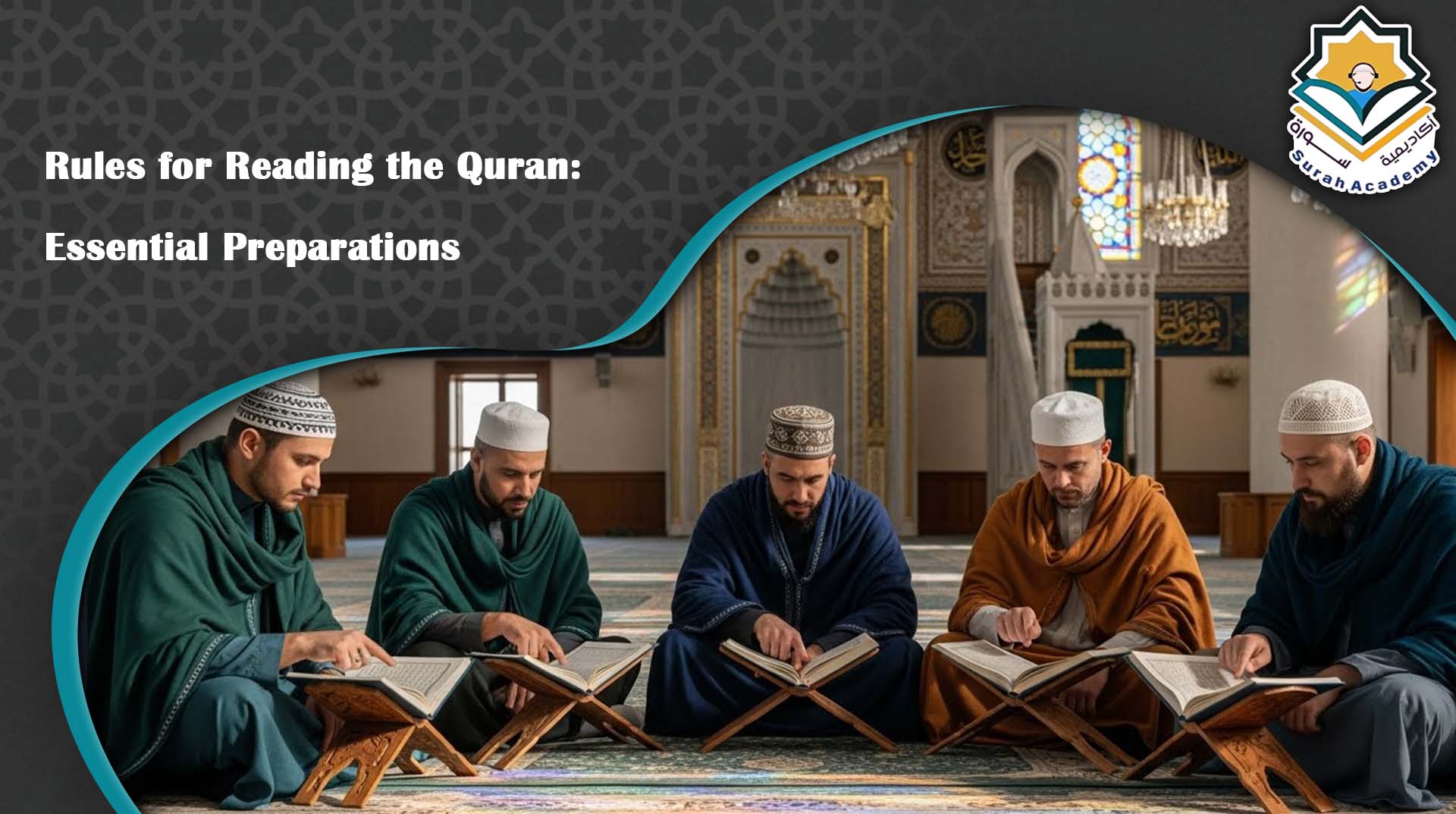
Before starting to read the Quran, it is crucial to observe certain guidelines to ensure both spiritual and physical readiness. These essential preparations help create an environment of respect and focus, allowing for a more meaningful and proper recitation of the Quran.
- Purification: The first of the rules for reading the Quran is performing wudu (ablution). Being in a state of physical purity is essential since the Quran should only be touched and recited while in a state of cleanliness.
- Choose a Clean Space: It’s important to select a clean and quiet place free from distractions. This allows for better concentration and connection with the sacred text, following the rules for reading the Quran with full devotion.
- Respect the Quran: Treat the Quran with the utmost care and respect. When you are not holding it, place it on a clean and elevated surface. This shows your reverence and adherence to the proper rules for reading the Quran.
- Face the Qibla (Optional): If possible, position yourself towards the direction of the Kaaba in Mecca. This helps to enhance spiritual focus and aligns you with the sanctity of the Quran, in accordance with the rules for reading the Quran.
- Seek Refuge and Begin with Bismillah: Start by saying “A’udhu billahi min ash-shaytan ir-rajim” (I seek refuge with Allah from the accursed devil) and then “Bismillah ir-Rahman ir-Rahim” (In the name of Allah, the Most Gracious, the Most Merciful). This ensures a mindful start and reflects adherence to the rules for reading the Quran.
- Pure Intentions: Approach the Quran with a sincere heart and a clear intention to seek guidance, knowledge, and blessings from Allah.
By following these rules, you prepare both your mind and spirit to connect with the sacred words of the Quran.
Start Your Quran Journey With Expert Guidance At SurahAcademy Today
Take the first confident step toward mastering the Quran with SurahAcademy, where authentic knowledge meets modern learning. Our qualified teachers guide students of all ages through Quran reading, Tajweed, memorization, and Islamic studies in a supportive online environment.
With flexible schedules, one-on-one sessions, and structured courses, SurahAcademy makes Quran learning accessible no matter where you live or how busy you are.
Whether you are a beginner or seeking advanced understanding, you will find a clear path tailored to your goals. Join SurahAcademy today, strengthen your connection with the Quran, and invest in knowledge that benefits you for life and beyond.

How to Read the Quran: The Proper Rules and Etiquette
The Quran is a unique and sacred book, unlike any other in the world. It should be treated with the utmost respect and reverence. While many elders are well-versed in the rules and etiquette for reading the Quran, it is equally important to teach children these manners with patience and care.
Rules for Reading the Quran
The rules for reading the Quran cover the necessary guidelines to recite it correctly, ensuring each letter and sound is pronounced as it should be. These rules are often closely linked to the rules of Tajweed, which govern the pronunciation and flow of the recitation.
- Correct Pronunciation: Every Arabic letter has a specific point of articulation in the mouth or throat, known as Makharij. Proper pronunciation ensures clarity and accuracy in reciting each letter, which is fundamental for the correct reading of the Quran.
- Following the Rules of Tajweed: The rules of Tajweed govern the pronunciation and flow of the recitation. This includes observing features like the heaviness or lightness of letters, elongation or stretching of sounds, and proper merging of sounds where necessary, all to ensure the clarity and precision of the recitation.
- Observing Pauses: The rules of Waquf (pauses) help determine where to stop or continue the recitation to avoid changing the meaning of the verses. Knowing the appropriate places to pause ensures that the verses are understood as they are intended.
- Purity or Ablution: The Quran should only be handled with pure hands, so performing Wudu (ablution) before reading is essential.
- Reading with Proper Tone and Rhythm: The Quran should be recited with a moderate and calm tone, neither too fast nor too slow, while reflecting on its meanings. This helps in conveying the message of the Quran effectively.
These rules and etiquettes ensure that the Quran is read with the proper reverence, preserving its sanctity and facilitating a deeper connection with its divine message.
Etiquette and Morality of Reading the Quran
There are several recommended etiquettes to follow when reading the Quran. While most of them are not obligatory, they are encouraged to help individuals better understand the spiritual meaning of the Quran and build a deeper relationship with it.
- Reflect on the Meanings of the Verses: Take time to ponder the meanings and guidance contained in each verse. The Quran offers direction for all aspects of life, and reflecting on its teachings can bring greater insight and wisdom.
- Sit Respectfully While Reading: Since the Quran is the Word of Allah, you should show respect by sitting in a proper and respectful manner. This humble posture reflects your reverence for the sacred text.
- Place the Quran in an Elevated Position: The Quran holds a lofty status, and it should be placed in a high and clean spot when not in use. This gesture acknowledges the sanctity and honor of the Quran.
- Hold the Quran with the Right Hand: The Quran should be carried in the right hand, as was the practice of the Prophet Muhammad (peace be upon him) in all of his good deeds. Following this tradition reflects respect for the sacred book.
- Recite the Seeking Refuge and Bismillah: Before beginning to read, it is essential to say “A’udhu billahi min ash-shaytan ir-rajim” (I seek refuge with Allah from the accursed devil) and “Bismillah ir-Rahman ir-Rahim” (In the name of Allah, the Most Gracious, the Most Merciful). This prepares the reader spiritually to engage with the Quran.
By adhering to these etiquettes, the reader cultivates a mindful and respectful connection with the Quran, enhancing the overall experience of recitation and reflection.
Rules for Reading the Quran: Key Guidelines and Etiquette
The Quran is the divine revelation of Allah, and reading it comes with specific rules that ensure its proper recitation and understanding. These rules for reading the Quran not only preserve the sanctity of the text but also help in building a deeper connection with its message.
Purification Before Reading:
One of the essential rules for reading the Quran is performing wudu (ablution) to ensure purity. The Quran should only be touched and read when a person is in a state of cleanliness, reflecting the sacred nature of the text.
Proper Pronunciation and Tajweed:
Following the rules for reading the Quran includes adhering to the rules of Tajweed. These rules govern the accurate pronunciation of Arabic letters, ensuring each sound is articulated from the correct point in the mouth. Mastering Tajweed helps in preserving the meaning of the Quran and prevents errors in recitation.
Respectful Posture and Handling:
It is important to follow the rules for reading the Quran by sitting in a respectful posture and treating the Quran with utmost reverence. Holding the Quran with the right hand and placing it on a clean, elevated surface when not in use reflects the respect it deserves.
Reflecting on the Meaning:
While reciting, one should reflect on the meanings of the verses. This is an important aspect of the rules for reading the Quran because understanding the message of the Quran leads to a more meaningful engagement with its teachings.
Reciting with the Right Intention:
The rules for reading the Quran emphasize having a sincere and pure intention before starting. Saying “A’udhu billahi min ash-shaytan ir-rajim” (I seek refuge with Allah from the accursed devil) and “Bismillah ir-Rahman ir-Rahim” (In the name of Allah, the Most Gracious, the Most Merciful) is a way to spiritually prepare oneself before beginning.
By following these rules for reading the Quran, individuals ensure they approach the Quran with reverence, mindfulness, and understanding, which enhances the experience of recitation and reflection.
Learning the Quran and Tajweed with Certified Teachers
Learning the Quran and Tajweed with certified teachers ensures precise recitation by adhering to the rules for reading the Quran, enhancing both pronunciation and understanding. These teachers provide personalized guidance, helping students master the spiritual and technical aspects of the Quran in a structured, meaningful way.
- Mastery of Tajweed and Recitation: Certified teachers ensure students master the rules for reading the Quran, including correct pronunciation and rhythm, following the principles of Tajweed.
- Understanding Recitation Rules: These teachers focus on important rules for reading the Quran, such as proper pauses, elongation (mad), and accurate articulation of letters.
- Immediate Correction of Mistakes: Certified instructors quickly correct any errors in recitation, preventing mistakes that may go unaddressed in self-study.
- Personalized Instruction: Certified teachers offer one-on-one lessons and group sessions tailored to the individual’s level, from beginners to advanced students.
- Global Accessibility: Qualified male and female teachers cater to students worldwide, ensuring accessibility and personalized attention for learners of all backgrounds.
- Holistic Learning: Beyond recitation, certified teachers teach the spiritual etiquettes and morals associated with reading the Quran, enhancing both academic and spiritual growth.
- Effective Resource for Beginners and Advanced Learners: Whether you are starting from scratch or refining your skills, certified teachers are the best resource for mastering the rules for reading the Quran and improving your Tajweed.
These points underline the importance of certified teachers in ensuring both accurate recitation and a deeper, more meaningful connection to the Quran.
Rules for Reading the Quran: Adhering to Specific Etiquettes During Recitation
Once your heart is present and your intention is pure, there are certain rules for reading the Quran that relate to the act of recitation itself. These practices were taught to us by the Prophet ﷺ and his companions, elevating your recitation from just reading to a profound act of worship.
Seeking Refuge in Allah (Ta’awwudh)
Before you begin, it’s essential to say:
“A’udhu billahi min ash-shaytan ir-rajim.”
This is a direct command from Allah:
“So when you recite the Quran, seek refuge in Allah from the accursed devil.” (Surah An-Nahl, 16:98)
By doing this, you purify your recitation from the whispers of Satan and prepare your heart to receive divine light without distortion.
Bismillah (Seeking Blessings)
Start each surah (chapter) with the phrase:
“Bismillahir Rahmanir Rahim”
The only exception is Surah At-Tawbah (9), where the surah does not begin with this phrase because it was not the practice of the companions. Instead, it begins with an announcement of disavowal.
If you start from the middle of a surah, simply saying the Ta’awwudh is sufficient, though adding the Bismillah is recommended and permissible.
Recitation with Proper Timing and Pace
Do not rush. The Quran is not a newspaper to be read quickly. It is a source of healing. Recite it with calmness, allowing the words to permeate your heart.
Understanding What You Recite
Can the heart be moved by a message it does not understand?
While reciting in Arabic is an act of worship in itself (and you earn rewards for every letter), the ultimate goal of revelation is guidance.
This is the next step in your journey. As you master the rules for reading the Quran, you should simultaneously strive to understand the meanings of the verses.
Purity: One of the Rules for Reading the Quran
In Islam, the physical and spiritual aspects are deeply intertwined. Honoring the Quran begins with honoring our physical state when approaching it.
What is the Ruling on Performing Wudu (Ablution) for Quran Recitation?
Yes, according to the majority of scholars from the four schools of thought, it is obligatory to be in a state of purity (wudu) to touch the Arabic text of the Quran.
This ruling is based on the profound words of Allah:
“None shall touch it except the purified.” (Surah Al-Waqi’ah, 56:79)
This verse, which also refers to the angels who touch the Preserved Tablet, serves as a clear evidence for us. We present ourselves in a state of physical purity to receive the most sacred speech.
Is Wudu Required for Reading the Quran from a Phone or Computer?
It is permissible to read from a device without wudu. Scholars generally agree that a phone or digital device is not considered a physical Quran. The text is merely data, not permanent ink on a page.
However, a scholar would advise: Etiquette is always superior. If you are able to perform wudu even before reading on a device, it shows the highest level of respect, and your reward will be greater, insha’Allah.
Is Purity Required When Reciting the Quran from Memory?
If you are reciting from memory without touching the physical Quran, then wudu is not mandatory. However, it is strongly recommended. It is always better to be in a state of purity when reciting the words of Allah.
Rules for Reading the Quran: Understanding the Pause Marks
The Quran has specific rules that must be followed during recitation to ensure proper reading and accurate comprehension. One of the key rules is the use of pause marks, or waqf symbols, which guide the reader on where to stop or continue. These pauses help break the Quranic verses into segments, ensuring that the recitation is accurate and the meaning is clear.
For instance:
- Complete Stop (⃝): This mark indicates the end of a verse, allowing the reader to pause and reflect on its meaning before moving to the next verse. It gives time for contemplation.
- Obligatory Stop (مـ): This symbol signals a mandatory stop. The reader must pause at this point to avoid altering the verse’s intended meaning. Continuing without stopping could lead to misinterpretation.
- Permissible Stop (ج): This mark represents a permissible pause. The reader has the option to pause at this point if desired, but it is not obligatory. The meaning of the verse will remain intact whether the reader pauses or continues.
Using these marks properly helps the reader maintain the integrity of the recitation and understand the message of the Quran more clearly. They are essential tools for anyone seeking to master the recitation of the Quran, ensuring that it is done with respect and precision.
Etiquettes for Teaching Quran Reading to Children
Teaching children the etiquettes of reading the Quran is a fundamental part of their spiritual upbringing. Instilling love and respect for the Quran at an early age helps build a strong foundation of faith for a lifetime.
Start by teaching children to approach the Quran with a clean body and a pure heart. Help them understand that the Quran is not like any other book. It is the word of Allah, and therefore, it must be treated with the utmost respect.
This includes simple rules such as washing hands before reading, sitting properly, and avoiding playfulness during recitation. Encourage children to begin with “Bismillah ir-Rahman ir-Rahim” and to sit in a quiet environment free from distractions.
Visual and interactive tools can be used to make learning Tajweed fun for children. Songs, hymns, and illustrated Quranic stories can help them remember the etiquettes of Quran reading.
Parents should set an example by reading the Quran daily, showing the children that Quran recitation is a cherished family practice.
Frequently Asked Questions (FAQs) about Rules for Reading the Quran
In this section, we address some of the most common questions regarding the rules and guidelines for reading the Quran. These FAQs aim to clarify common concerns and provide helpful insights to ensure correct and respectful recitation for beginners and advanced learners alike.
1. What is the importance of the rules for reading the Quran?
The rules for reading the Quran are essential to ensure correct pronunciation and articulation of the verses. Adhering to these rules preserves the meaning of the Quran as it was revealed and prevents errors that could affect both the understanding and recitation of the words.
2. What are the main rules for reading the Quran?
Some of the key rules to follow include:
Tajweed: Improving the sound while reading, ensuring proper articulation of the letters.
Madd (elongation): Extending certain letters where required.
Idgham (merging) and Ikhfa (hiding): Rules for the pronunciation of specific letters in specific contexts.
Waqf (pauses) and Ibtida’ (starting): Knowing where to pause and where to begin when reciting.
3. Can I learn the rules of reading the Quran without a teacher?
While it is possible to learn some basic rules through resources like books, audio clips, or videos, the best way to ensure correct recitation is through guidance from a qualified teacher, especially in tajweed, to avoid mistakes and improve pronunciation.
4. What is Tajweed?
Tajweed is the science of improving the recitation of the Quran by ensuring each letter is pronounced correctly with the proper articulation points, and the recitation follows the rules of elongation, pauses, and intonation.
5. Do women have different rules for reading the Quran?
No, there are no different rules for women when it comes to reading the Quran. Both men and women must follow the same rules for proper recitation and pronunciation.
6. How can I learn the rules for reading the Quran correctly?
You can start by attending Tajweed classes, either online or in person, at specialized Quran academies such as Surah Academy. Using apps, audio recordings, and videos can also be helpful for practice.
In conclusion, mastering the rules for reading the Quran is not only essential for accurate recitation, but it also deepens the connection between the reader and the divine words.
These rules preserve the integrity of the sacred text, ensuring its message is conveyed as it was revealed. At Surah Academy, we remain committed to providing the necessary tools and guidance to help individuals master these recitation rules.
By doing so, we ensure that the beauty and wisdom of the Quran continue to resonate with all who seek to understand it in its purest form.
read more:
Learn how to read quran USA 2025 If this is an area you’d like to explore in more depth, check out our Quran For Beginners London. For a deeper dive, take a look at our Learn Quran Online For Beginners. It’s worth pairing this with our Quran Lessons For Beginners for a fuller picture.
How To Study Quran 2025 Many students pair this with our How To Learn Quran For Beginners to round out their learning. For learners who want to go further, take a look at our Quran Learning For Beginners. For learners who want to go further, take a look at our Learning The Quran For Beginners. For a deeper dive, take a look at our The Virtues Of Reciting Quran.
Benefits of reading Quran with Tajweed: Key Advantages 2026 Our Quran Classes For Beginners can be a good complement for anyone following this path. If this is an area you’d like to explore in more depth, check out our Online Quran Classes For Beginners. For learners who want to go further, take a look at our Teaching Quran Remotely Online Classes.